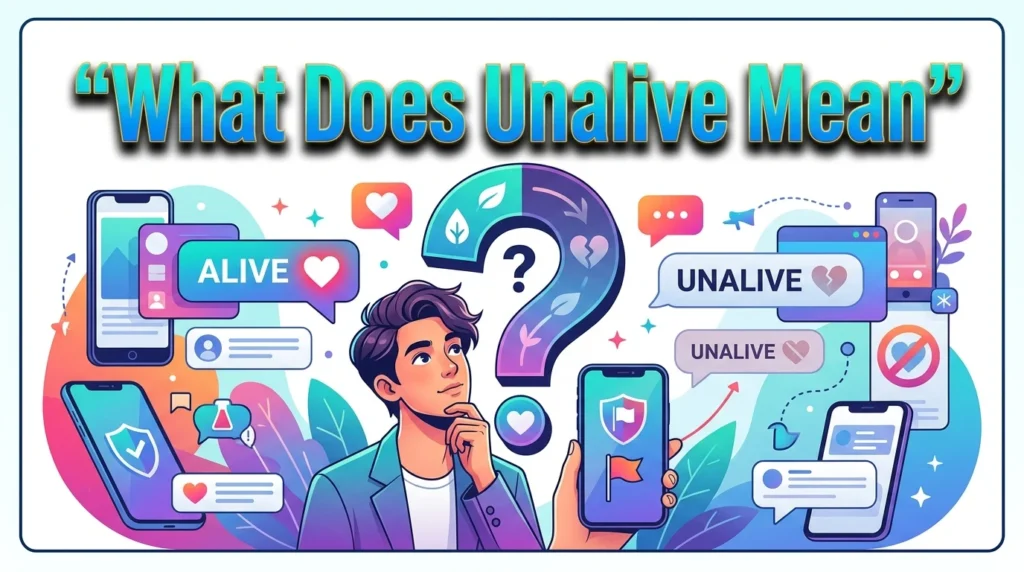
Language changes constantly, especially online. Every year, new words and expressions appear across social media platforms, messaging apps, and online communities. One term that has gained significant attention in recent years is “unalive.”
If you’ve spent time on TikTok, Instagram, YouTube, or online forums, you’ve probably seen someone use the word and wondered what it actually means. Is it slang? Is it a joke? Does it literally mean dead? Why are people replacing traditional words with this unusual expression?
The confusion is understandable because “unalive” isn’t a traditional English word that many people learned in school. Instead, it emerged from internet culture and evolved into a widely recognized expression.
This guide explains exactly what unalive means, where it came from, how people use it, and what it reveals about modern communication.
What Does Unalive Mean in English
The term unalive is commonly used as an alternative way of saying that someone died, was killed, or took their own life.
In simple English:
- Unalive = dead or no longer alive
- To unalive someone = to kill someone
- To unalive oneself = to die by suicide
People often use the word online instead of more direct terms.
Examples
“The character got unalived in the final episode.”
“Many users discussed how the hero was almost unalived.”
“The story mentions someone who unalived himself.”
Although widely understood online, “unalive” remains informal slang rather than standard formal English.
Quick Meaning of Unalive
Definition: A modern internet slang term used as a substitute for words related to death, killing, or suicide.
Key Points
- Popular on social media platforms
- Often used to discuss sensitive topics
- Functions as a softer or indirect expression
- Common among younger internet users
- Frequently appears in videos, comments, and chats
Many people encounter the term for the first time on TikTok and assume it means something completely different. In reality, it usually relates to death or serious harm.
Origin & Background
The story of “unalive” reflects how digital communication shapes language.
Originally, the word appeared in online communities and gaming spaces as a humorous or exaggerated way of saying someone died in a game or fictional story.
Over time, social media creators began using the term more frequently when discussing serious topics involving death, violence, or suicide.
Social Media Influence
Platforms such as TikTok helped spread the word rapidly. Content creators often preferred indirect language when discussing sensitive subjects.
As millions of users encountered the term repeatedly, it became part of everyday internet vocabulary.
Cultural Evolution
What started as niche internet slang eventually entered mainstream conversations.
Today, people use “unalive” in:
- TikTok videos
- YouTube commentary
- Instagram captions
- Reddit discussions
- Text messages
- Online gaming communities
The word demonstrates how internet culture can create entirely new expressions that become widely understood across generations.
Unalive Meaning TikTok
On TikTok, “unalive” typically refers to death, killing, or suicide.
The platform played a major role in popularizing the expression.
Creators discussing sensitive topics often used “unalive” as a substitute for more direct terms. As audiences repeatedly encountered the word, it became part of TikTok’s unique language culture.
Examples include:
- “The villain got unalived.”
- “He almost got unalived in the movie.”
- “The documentary discusses people who were unalived.”
Today, many TikTok users instantly understand the term without needing an explanation.
Unalive Someone
The phrase “unalive someone” means to kill someone.
Examples:
- “The villain tried to unalive the hero.”
- “The suspect attempted to unalive another character.”
This usage is common in discussions about movies, books, games, and fictional stories.
Because the phrase refers to a serious action, context matters greatly.
Does Unalive Mean Dead
Yes.
In most situations, unalive means dead or no longer living.
For example:
- “The pet was unalived” generally means the pet died.
- “The character became unalived” means the character died.
However, because it is slang, the tone can vary depending on the conversation.
Unalive Pronunciation
The pronunciation is straightforward:
Unalive
Phonetic pronunciation:
uhn-uh-LYV
Broken down:
- Un = “uhn”
- Alive = “uh-live”
The emphasis is usually placed on the second part:
uhn-uh-LYV
Most English speakers pronounce it naturally because it combines the familiar prefix “un-” with the word “alive.”
Unalive Oxford Dictionary
Many people search for “unalive Oxford dictionary” to see whether the word has become officially recognized.
While language authorities continuously track evolving vocabulary, the word is primarily known as internet slang and informal online language.
Its widespread use demonstrates how modern communication can influence the development of English vocabulary.
Unalived Himself Meaning
The phrase “unalived himself” is commonly used online as an indirect way of referring to suicide.
Example:
“The article stated that he unalived himself.”
Because this topic involves serious emotional and mental health issues, respectful and accurate communication is important.
In professional, educational, medical, or journalistic contexts, more precise language is generally preferred.
Unalive Synonym
Depending on context, possible synonyms include:
- Died
- Passed away
- Deceased
- Killed
- Murdered
- Lost their life
- Perished
- Departed
- No longer living
- Took their own life
Each synonym carries a different tone and should be chosen carefully.
Real-Life Conversations
WhatsApp Chat
Person A: Did you watch the finale?
Person B: Yes! I can’t believe the main character got unalived.
Person A: That shocked me too.
Instagram DM
Person A: Why is everyone saying “unalived”?
Person B: It’s basically internet slang for died or killed.
Person A: Oh, that makes much more sense now.
TikTok Comments
Person A: Did the villain survive?
Person B: Nope, he got unalived at the end.
Person A: I totally missed that scene.
Text Message
Person A: What does “unalived himself” mean?
Person B: It’s an indirect way of saying someone died by suicide.
Person A: Thanks for explaining.
Emotional & Psychological Meaning
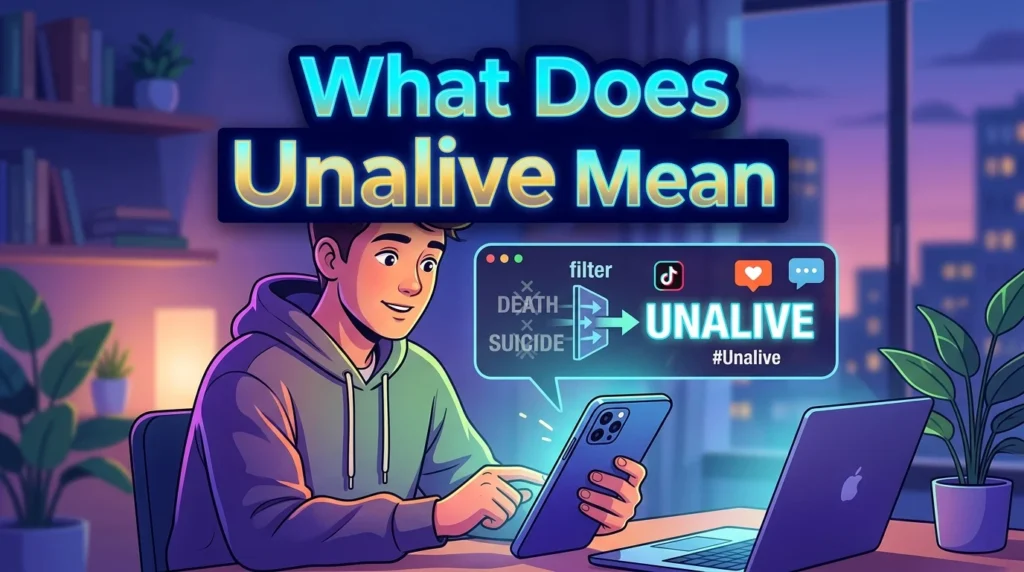
The popularity of “unalive” reveals something interesting about modern communication.
Many people feel uncomfortable discussing death directly. Using indirect language can create emotional distance from painful subjects.
The term may help users:
- Discuss difficult topics more comfortably
- Reduce emotional intensity
- Fit into online community norms
- Communicate with audiences familiar with internet culture
Imagine a teenager scrolling through social media after hearing upsetting news. They may find it easier to engage with conversations using softer language rather than confronting emotionally charged terms directly.
This doesn’t necessarily make the topic less serious. Instead, it reflects how language adapts to emotional needs and social environments.
Usage in Different Contexts
Social Media
Extremely common.
Users frequently discuss entertainment, news, and internet trends using the term.
Friends & Relationships
Friends may use “unalive” jokingly when discussing fictional situations or internet memes.
Example:
“That exam almost unalived me.”
This is usually figurative rather than literal.
Work & Professional Settings
Generally not recommended.
Professional communication benefits from clear and precise language.
Casual vs Serious Tone
Casual:
“The game character got unalived.”
Serious:
Topics involving real people require greater sensitivity and clarity.
When NOT to Use It
Avoid using “unalive” in:
- Medical documents
- Academic papers
- Legal reports
- Professional journalism
- Official workplace communication
- Sensitive conversations requiring precision
Using slang in serious situations may cause confusion or appear insensitive.
Common Misunderstandings
People Think It Means Something Else
Some assume “unalive” is a joke with no connection to death.
In reality, it usually refers directly to death or killing.
Tone Confusion
The word can sound humorous despite describing serious events.
This creates misunderstandings.
Literal vs Figurative Usage
Literal:
“The character was unalived.”
Figurative:
“That workout unalived me.”
The second example means the workout was exhausting, not fatal.
Comparison Table
| Search Intent | Meaning |
|---|---|
| What Does Unalive Mean | Understanding the definition |
| How to Use Unalive | Learning proper usage |
| Examples of Unalive | Seeing real conversations |
| Unalive vs Dead | Comparing slang and traditional language |
| Unalive vs Passed Away | Comparing informal and respectful expressions |
| Unalive vs Killed | Comparing direct and indirect wording |
Key Insight
The word “unalive” isn’t replacing traditional English. Instead, it serves as a modern internet alternative that reflects changing communication habits and digital culture.
Variations / Types
Unalive Meaning
General internet slang referring to death or killing.
Unalive in Text
Used in messages and online chats.
Unalive Abbreviation
No widely accepted abbreviation exists.
Unalive Slang
Modern internet slang popular among younger users.
Unalive in Chat
Common in group chats and social media discussions.
Self-Unalive Meaning
Refers to dying by suicide.
Unalive Someone Meaning
Means to kill someone.
Got Unalived Meaning
Means someone died or was killed.
Nearly Unalived Meaning
Means someone almost died.
Accidentally Unalived Meaning
Suggests death occurred unintentionally.
How to Respond When Someone Uses It
Casual Replies
- “I know exactly what you mean.”
- “That was shocking.”
- “I didn’t expect that.”
Funny Replies
- “The plot twist got me too.”
- “That ending was wild.”
- “I never saw it coming.”
Mature Replies
- “That’s a serious topic.”
- “Thanks for explaining carefully.”
- “Let’s discuss it respectfully.”
Respectful Replies
- “I’m sorry to hear that.”
- “That sounds difficult.”
- “Thank you for sharing.”
Regional & Cultural Usage
Western Culture
The term is widely recognized among internet users and younger audiences.
Asian Culture
Recognition varies depending on exposure to English-language social media.
Middle Eastern Culture
The word appears mainly among bilingual and internet-focused communities.
Global Internet Usage
Online platforms have transformed “unalive” into a globally recognized expression.
Gen Z vs Millennials
Gen Z: Often uses and understands the term immediately.
Millennials: Generally understand it but may prefer traditional language.
Is It Safe for Kids?
The word itself is not offensive.
However, because it often relates to topics involving death, violence, or suicide, parents and educators should provide age-appropriate context when discussing its meaning.
Understanding the surrounding conversation is more important than focusing solely on the word itself.
FAQs
What does it mean when people say unalive?
When people say “unalive,” they are usually referring to death, killing, or suicide in an indirect way. The term is commonly used online as a substitute for more direct words that some users find uncomfortable or sensitive.
Why do people on TikTok say unalive?
People on TikTok often use “unalive” when discussing topics related to death or self-harm. Over time, the term became part of TikTok culture and is now widely understood by users across social media platforms.
When did unalive become a word?
The term “unalive” existed informally for years, but it gained widespread popularity during the late 2010s and early 2020s through social media platforms such as TikTok, YouTube, and online communities.
Is it okay to say someone is unalived?
Yes, many people use the phrase online and most internet users understand its meaning. However, in professional, medical, academic, or news-related contexts, more precise language is usually recommended to avoid confusion.
Is unalive an official dictionary word?
While the term has gained significant popularity online, it is primarily considered internet slang. Dictionary recognition may vary depending on the publication and its criteria for adding new words.
What is the difference between unalive and dead?
Both terms refer to the same outcome, but “dead” is a standard English word, while “unalive” is an informal internet expression often used in social media conversations.
Can unalive be used as a joke?
Sometimes people use “unalive” humorously in memes or exaggerated situations, such as saying, “That workout almost unalived me.” In these cases, the meaning is figurative rather than literal.
What does self-unalive mean?
Self-unalive is an internet phrase that refers to taking one’s own life. Because it relates to a serious subject, discussions involving this term should always be approached with sensitivity and respect.
Do older generations understand the word unalive?
Many younger internet users recognize the term immediately, while older generations may be unfamiliar with it unless they regularly use social media or follow online trends.
Will the word unalive continue to be popular?
Language trends change over time, but “unalive” has become deeply embedded in internet culture. As long as social media influences communication, the term is likely to remain widely recognized.
Conclusion
Language evolves because people constantly find new ways to express difficult ideas. The term unalive is a perfect example of how internet culture shapes modern communication. While it generally means death, killing, or suicide, its popularity comes from offering a softer and more indirect way to discuss sensitive topics. Understanding what unalive means helps you navigate social media conversations with confidence, recognize cultural context, and communicate more effectively in today’s digital world while choosing the most appropriate language for every situation