
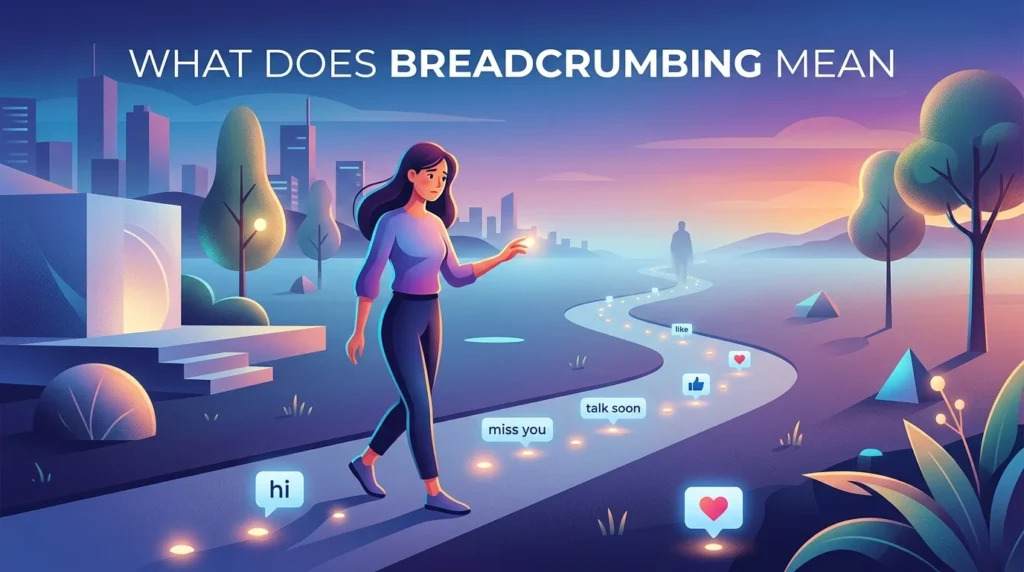
If you have ever felt like someone was giving you just enough attention to keep you interested but never enough to build a real connection, you may have experienced breadcrumbing.
The term has become increasingly popular on social media, dating apps, and relationship forums because many people struggle to understand confusing communication patterns. One day someone sends a sweet message, likes your photos, or comments on your stories. The next day, they disappear without explanation.
This inconsistency often leaves people wondering whether the other person is interested or simply keeping them around as an option.
Understanding breadcrumbing can help you recognize unhealthy communication habits, protect your emotional well-being, and make more confident decisions in relationships and friendships.
What Does Breadcrumbing Mean? – Quick Meaning
Breadcrumbing is a behavior where someone gives small amounts of attention, affection, or communication to keep another person interested without committing to a deeper relationship.
Common signs include:
- Sending occasional messages without meaningful conversation
- Flirting but avoiding plans
- Reacting to stories while staying emotionally unavailable
- Giving mixed signals about their intentions
- Disappearing for days or weeks and then returning suddenly
Examples:
“Hey stranger, how have you been?”
“We should definitely hang out sometime.”
“Sorry I’ve been busy lately.”
These messages may seem harmless, but when repeated without genuine effort, they often create false hope.
Origin & Background
The term “breadcrumbing” comes from the idea of leaving small breadcrumbs behind, similar to the famous story of Hansel and Gretel. Instead of offering a full relationship or meaningful commitment, a person leaves tiny “crumbs” of attention.
The phrase became popular during the rise of dating apps and social media platforms.
As online communication evolved, people gained more ways to stay connected without investing emotionally. Features such as story reactions, quick likes, emojis, and short messages made it easier to maintain someone’s interest with minimal effort.
Today, breadcrumbing is widely discussed across dating communities because it reflects a common challenge in modern digital relationships.
What Does Breadcrumbing Mean on Instagram?
On Instagram, breadcrumbing often happens through low-effort interactions that create the appearance of interest.
Examples include:
- Watching every story but never starting a conversation
- Liking old photos unexpectedly
- Sending heart emojis without meaningful discussion
- Replying to stories occasionally and then disappearing
- Flirting through DMs without making plans
Many people confuse these actions with genuine romantic interest. However, consistent communication and real effort matter far more than occasional digital attention.
Breadcrumbing Examples
Here are some common examples:
Example 1
Someone messages you every few weeks saying:
“I’ve been thinking about you.”
But they never arrange a date.
Example 2
A person constantly likes your social media posts but ignores your direct messages.
Example 3
An ex-partner checks in regularly but avoids discussing reconciliation.
Example 4
Someone sends flirty texts late at night but rarely communicates during the day.
What Does Breadcrumbing Mean Slang?
In slang, breadcrumbing refers to leading someone on through small signals of interest without genuine commitment.
People often use it when discussing dating situations where one person keeps another emotionally invested while avoiding a serious relationship.
Example:
“He’s not dating her. He’s just breadcrumbing her.”
The slang meaning usually carries a negative tone because it involves mixed signals and emotional confusion.
Breadcrumbing Meaning in Relationship
In relationships, breadcrumbing happens when one partner provides inconsistent affection to maintain control or attention.
The person doing the breadcrumbing may:
- Enjoy validation
- Fear commitment
- Keep backup options available
- Avoid emotional responsibility
For the receiving partner, the experience can be emotionally draining because it creates uncertainty and false expectations.
Bread Crumbing in Relationship

The phrase “bread crumbing in relationship” is simply another way people describe breadcrumbing behavior.
Common relationship breadcrumbs include:
- Promises without action
- Occasional romantic messages
- Repeated cancellations
- Future plans that never happen
- Temporary bursts of affection
Healthy relationships are built on consistency rather than occasional emotional crumbs.
Breadcrumbing Psychology
Understanding the psychology behind breadcrumbing helps explain why it happens.
Several factors may contribute:
Fear of Commitment
Some people enjoy connection but fear the responsibilities that come with a serious relationship.
Need for Validation
Receiving attention boosts self-esteem. Keeping someone interested can provide ongoing emotional validation.
Fear of Loneliness
A person may breadcrumb others because they dislike being alone but are not ready for commitment.
Emotional Immaturity
Some individuals struggle with honest communication and avoid difficult conversations about their intentions.
Social Media Culture
Modern platforms encourage constant connection, making it easier to maintain superficial relationships.
Personal Scenario
Imagine someone who frequently replies to your stories and sends compliments. Months pass, yet they never make concrete plans. You begin questioning whether they genuinely care or simply enjoy the attention exchange. This uncertainty is exactly why breadcrumbing can feel emotionally exhausting.
What Does Breadcrumbing Mean in Friendship?
Breadcrumbing is not limited to dating.
In friendships, breadcrumbing occurs when someone maintains minimal contact only when convenient.
Examples include:
- Reaching out only when they need help
- Ignoring messages for long periods
- Contacting you only during personal crises
- Making plans repeatedly and canceling
A healthy friendship involves mutual effort and consistent communication.
Breadcrumbing Pronunciation
The word “breadcrumbing” is pronounced:
BRED-krum-ing
Phonetic spelling:
/ˈbredˌkrʌmɪŋ/
Breaking it down:
- Bread = “bred”
- Crumb = “krum”
- Ing = “ing”
Say it slowly as:
BRED-krum-ing
Real-Life Conversations
WhatsApp Conversation
Person A: Hey, are we still meeting this weekend?
Person B: Maybe. I’ll let you know.
Person A: Okay, what day works best?
Person B: Not sure yet.
(No response afterward.)
Instagram DM Conversation
Person A: Thanks for liking all my photos!
Person B: You’re beautiful 😊
Person A: That’s sweet. Want to grab coffee sometime?
Person B: Haha maybe one day.
TikTok Comment Conversation
Person A: You always comment on my videos.
Person B: They’re amazing!
Person A: We should chat sometime.
Person B: For sure.
(Conversation never continues.)
Text Message Conversation
Person A: Haven’t heard from you in weeks.
Person B: Sorry, life’s been cr*zy.
Person A: Want to catch up?
Person B: Definitely!
(No follow-through.)
Emotional & Psychological Meaning
Breadcrumbing often creates confusion rather than clarity.
People on the receiving end may experience:
- Hope
- Anxiety
- Frustration
- Self-doubt
- Emotional dependency
The behavior keeps emotional possibilities alive without offering genuine security.
It reflects a larger communication challenge in modern culture: many people want connection, but not everyone is prepared for commitment.
Usage in Different Contexts
Social Media
Often used to describe inconsistent likes, comments, reactions, and messages.
Friends & Relationships
Refers to keeping someone emotionally invested without meaningful effort.
Work and Professional Settings
Can describe vague promises about promotions, partnerships, or opportunities that never materialize.
Casual vs Serious Tone
Casually, people may joke about being breadcrumbed online.
In serious conversations, the term often highlights emotional manipulation or unhealthy relationship patterns.
When NOT to Use It
Avoid using breadcrumbing when:
- Someone is genuinely busy and communicates honestly
- There is clear mutual understanding
- Communication delays have reasonable explanations
- Cultural differences affect communication styles
Not every inconsistent interaction is breadcrumbing.
Intent and patterns matter.
Common Misunderstandings
Mistaking Busyness for Breadcrumbing
A busy person may communicate less frequently while still showing genuine commitment.
Assuming Every Like Is Interest
Social media engagement alone does not necessarily indicate romantic feelings.
Expecting Constant Communication
Healthy relationships allow space without becoming breadcrumbing.
Taking the Term Literally
Breadcrumbing is figurative, not related to actual food or breadcrumbs.
Comparison Table
| Topic | Definition Intent |
|---|---|
| What Does Breadcrumbing Mean | Understanding the core definition |
| How to Use Breadcrumbing | Knowing when the term applies |
| Examples of Breadcrumbing | Recognizing real-life situations |
| Breadcrumbing vs Ghosting | Breadcrumbing keeps contact alive while ghosting ends communication entirely |
| Breadcrumbing vs Benching | Benching keeps someone as an option, while breadcrumbing uses small interactions to maintain interest |
| Breadcrumbing vs Love Bombing | Love bombing overwhelms with attention; breadcrumbing offers very little attention |
Key Insight
The biggest difference between breadcrumbing and healthy communication is consistency. Genuine interest usually shows through actions, not occasional crumbs of attention.
Variations and Types
Breadcrumbing Meaning
Keeping someone interested with minimal effort.
Breadcrumbing in Text
Sending occasional messages without deeper engagement.
Breadcrumbing Abbreviation
No universal abbreviation exists, though people sometimes shorten it to “BC” informally.
Breadcrumbing Slang
Leading someone on emotionally.
Breadcrumbing in Chat
Responding just enough to maintain interest.
Social Media Breadcrumbing
Using likes and reactions to create false signals.
Romantic Breadcrumbing
Occurs within dating situations.
Friendship Breadcrumbing
Maintaining contact only when convenient.
Emotional Breadcrumbing
Providing tiny amounts of affection to sustain hope.
Professional Breadcrumbing
Making promises about opportunities without follow-through.
How to Respond When Someone Uses It
Casual Replies
- “Let me know when you’re actually free.”
- “Sounds good. Reach out when you have a plan.”
Funny Replies
- “I’m looking for a meal, not breadcrumbs.”
- “Do you come with a full conversation package?”
Mature Replies
- “I value consistency more than occasional check-ins.”
- “I’d appreciate clearer communication.”
Respectful Replies
- “Thanks for reaching out. I’m looking for something more consistent.”
- “I wish you well, but I need clarity moving forward.”
Regional & Cultural Usage
Western Culture
Often discussed in dating and online relationship conversations.
Asian Culture
The concept exists, though indirect communication styles may influence interpretation.
Middle Eastern Culture
Breadcrumbing may be viewed more seriously because relationships often involve stronger expectations around commitment.
Global Internet Usage
The term is widely recognized across social media platforms worldwide.
Gen Z vs Millennials
Gen Z: Frequently uses the term on TikTok and Instagram.
Millennials: Often discuss it in dating and relationship contexts.
Both generations recognize breadcrumbing as a modern communication challenge.
Is It Safe for Kids?
Yes, the term itself is generally safe for kids to understand.
However, parents and educators can use discussions about breadcrumbing to teach healthy communication, emotional boundaries, and respectful online behavior.
Understanding the concept may help young people recognize confusing relationship dynamics early.
FAQs
What does it mean to be breadcrumbing someone?
Breadcrumbing someone means giving them small amounts of attention, affection, or communication to keep them interested without intending to build a serious relationship or commitment.
What are the red flags of breadcrumbing?
Common red flags include inconsistent texting, frequent flirting without action, canceled plans, vague promises, long periods of silence followed by sudden messages, and repeated mixed signals.
How do you respond to someone who is breadcrumbing you?
The best response is to communicate your expectations clearly. If the behavior continues, consider setting boundaries or limiting contact to protect your emotional well-being.
What is breadcrumbing in Gen Z slang?
In Gen Z slang, breadcrumbing refers to leading someone on through occasional texts, likes, story reactions, or messages without genuine interest in a deeper connection.
Is breadcrumbing the same as ghosting?
No. Ghosting involves completely ending communication, while breadcrumbing keeps communication alive through occasional interactions that create false hope.
Why do people breadcrumb others?
People may breadcrumb because they enjoy attention, fear commitment, feel lonely, want validation, or are unsure about what they want from a relationship.
Can breadcrumbing happen in friendships?
Yes. Friends can breadcrumb by reaching out only when convenient, needing help, or wanting support while making little effort to maintain the friendship otherwise.
Is breadcrumbing emotionally manipulative?
It can be. While not always intentional, breadcrumbing often creates confusion and emotional uncertainty, causing the other person to stay invested without receiving genuine commitment.
How can I tell if I’m being breadcrumbed?
Look for patterns rather than isolated incidents. If someone regularly shows interest but avoids meaningful conversations, plans, or commitment, breadcrumbing may be occurring.
Can a breadcrumber change their behavior?
Yes. If a person becomes aware of their actions and genuinely wants a healthier relationship, they can improve through honest communication, consistency, and clear intentions.
Conclusion
Breadcrumbing is more than a trendy internet term. It describes a communication pattern that many people experience in friendships, dating, and even professional relationships. The behavior often creates confusion because it offers small signs of interest without real commitment. By understanding the signs, motivations, and emotional impact of breadcrumbing, you can recognize unhealthy patterns earlier and set stronger boundaries. Genuine relationships are built on consistency, honesty, and mutual effort—not occasional crumbs of attention that leave you wondering where you stand.